The Best Screen-Free Puzzles for Your Mental Health
Word searches and Sudoku offer something scrolling cannot — genuine mental rest. Here is why screen-free puzzles are one of the best tools for anxiety, focus, and daily calm.
There is a version of rest that does not actually rest you. Scrolling through a feed, watching short videos, flicking between apps — your body is still, but your nervous system is not. Every notification, every unexpected image, every piece of information keeps your brain in a low-grade state of alert.
Physical puzzles work differently. They ask your mind to focus on one thing — just one — and in doing so, they offer something increasingly rare: genuine mental quiet.
This is not about nostalgia for paper. It is about what certain types of focused, screen-free activity do to an anxious brain, and why two specific puzzle formats — word search and Sudoku — show up repeatedly in discussions of stress relief, cognitive health, and daily calm.
---
Why Screens Don't Actually Rest Your Brain
When you put your phone down after 30 minutes of scrolling, you rarely feel better. Often, you feel slightly worse — more restless, more dissatisfied, more tired without being sleepy.
This is partly because passive screen use keeps your brain's threat-detection systems engaged. Social comparison, news content, algorithmic unpredictability — all of it registers as low-level stimulation that prevents genuine recovery. Your brain never quite gets the signal that it's safe to slow down.
Physical puzzles send a different signal entirely. No algorithm. No comparison. No next thing queued up automatically. Just the task in front of you, a pen, and however long you want to give it.
Word Search: The Quiet Mind Reset
Word search puzzles occupy a particular cognitive sweet spot. They require enough focus to pull your attention away from rumination, but not so much that they become stressful. You are scanning, recognising, circling — a gentle, repetitive kind of attention that researchers associate with the early stages of flow.
For people with anxiety, this matters. Anxiety thrives in unoccupied mental space. When your brain has a specific, bounded task to focus on — finding a word, scanning a grid — the part of your mind that generates worry simply has less room to operate.
Word search is particularly well-suited to:
- Evening wind-down — replacing 20–30 minutes of screen time before bed
- Anxious waiting — appointments, commutes, situations where idle time triggers spiralling
- Low-energy days — when everything feels heavy and the bar for focus needs to be low
- Mindfulness without meditation — for people who find sitting in silence counterproductive
The best word search books for mental health pair each puzzle with a brief grounding intention — a simple phrase to anchor your attention before you begin. This combination of a calming thought and a focused activity creates something close to a mindfulness session, without requiring any prior practice.
Advertisement
Sudoku: The Focus Reset
Where word search asks very little of you, Sudoku asks for more. Each puzzle is a logic problem — a set of constraints to work within, a solution to find. Your brain has to stay engaged, track multiple variables, and think ahead.
This is not a disadvantage. For certain mental states, it is exactly what's needed.
When your mind is scattered — not anxious exactly, but restless and unfocused — the gentler activity of word search may not be quite enough to hold your attention. Sudoku's higher cognitive demand gives your brain enough to do that it settles into concentrated focus rather than drifting.
This is the state psychologists call flow: complete absorption in a task that is challenging enough to be engaging but achievable enough not to be frustrating. The benefits of flow for mental health are well-documented — reduced rumination, lower cortisol, improved mood.
Sudoku is particularly well-suited to:
- Mental sharpness — keeping the brain actively engaged and challenged
- Restless focus — when you need something more demanding than passive rest
- Cognitive maintenance — a daily habit that supports long-term brain health
- Structured challenge — the satisfaction of a problem with a concrete solution
A quality Sudoku book offers a range of difficulty levels, so you can meet yourself where you are — an easier puzzle on a tired day, a harder one when you want to be genuinely stretched.
Which One Is Right for You Right Now?
Both formats offer real mental health benefits. The question is which one fits your current state.
Reach for word search if you are:
- Anxious and spiralling — lower demand, more calming
- Winding down before bed — gentler on the nervous system
- New to screen-free activities — easy to pick up and put down
- Exhausted and need something undemanding
Reach for Sudoku if you are:
- Restless and unfocused — higher demand, more absorbing
- Looking for a brain challenge — satisfying and cognitively engaging
- Wanting a structured daily practice — escalating difficulty rewards consistency
- In a mood to problem-solve rather than simply unwind
The simplest approach is to keep both nearby — a word search book on the nightstand, a Sudoku book on the desk or in your bag — and reach for whichever one fits the moment.
Two Books Worth Having
If you want to start with word search, [Mindful Moments Word Search](https://www.amazon.com/dp/B0FHHG2MW5?tag=aurabean-20) pairs large-print puzzles with calming mindful intentions — a grounding phrase before each puzzle to anchor your attention and set a calm tone. Clean design, no clutter. The kind of book you keep on your nightstand and reach for instead of your phone.
If you want to start with Sudoku, [1000+ Sudoku Puzzle Book](https://www.amazon.com/dp/B0FHBQS2FG?tag=aurabean-20) offers over a thousand puzzles across a full range of difficulty levels — easy through hard — designed for daily mental exercise. A straightforward, well-structured book for building a consistent puzzle habit.
Neither will fix anxiety on its own. But both give your brain somewhere specific to land, away from the scroll and the noise. That is more valuable than it sounds.
The Broader Habit
The benefit of screen-free puzzle practice compounds over time. A single session interrupts a spiral. A consistent habit starts to reshape how your nervous system responds to idle time — training it, gradually, to reach for something calming rather than something stimulating.
If you are building a broader daily calm practice, the [evening routine guide](/blog/the-evening-routine-that-helps-you-sleep) and the [anxiety cycle article](/blog/how-to-break-the-anxiety-cycle-for-good) are good places to continue. And if you want a digital check-in tool to track how your mood and focus shift over time, the [AuraBean app](https://aurabean.me/studio) is designed for exactly that.
Start small. One puzzle tonight, instead of the phone.
Recommended Books
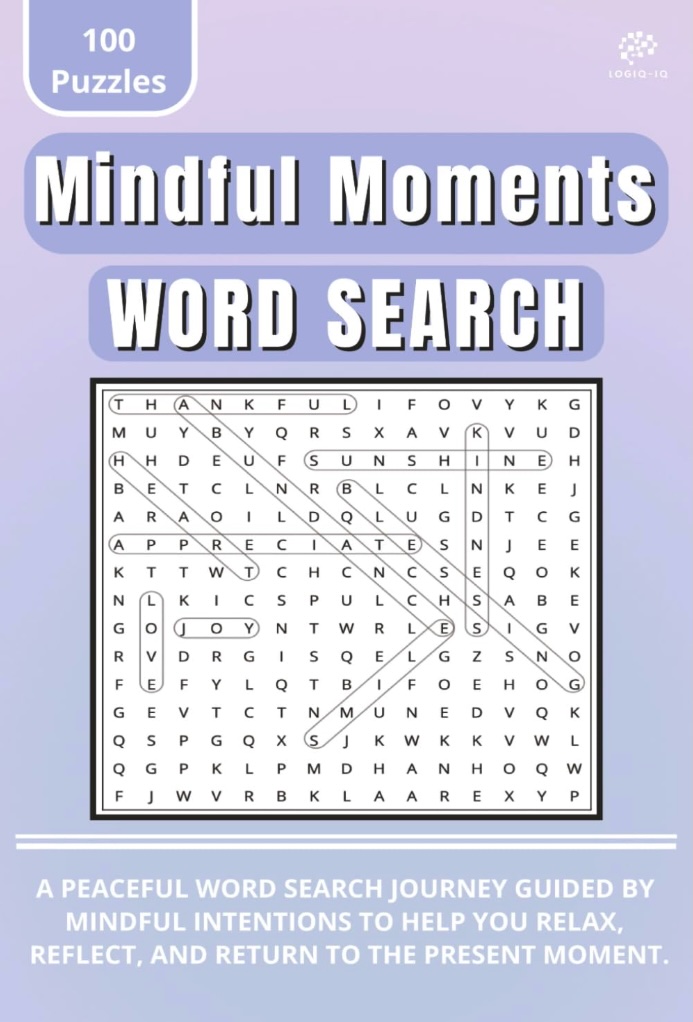
Mindful Moments Word Search
by AuraBean Studio
Word search puzzles paired with calming mindful intentions. Large print, clean design — the ideal screen-free way to wind down and quiet an anxious mind.
View on Amazon →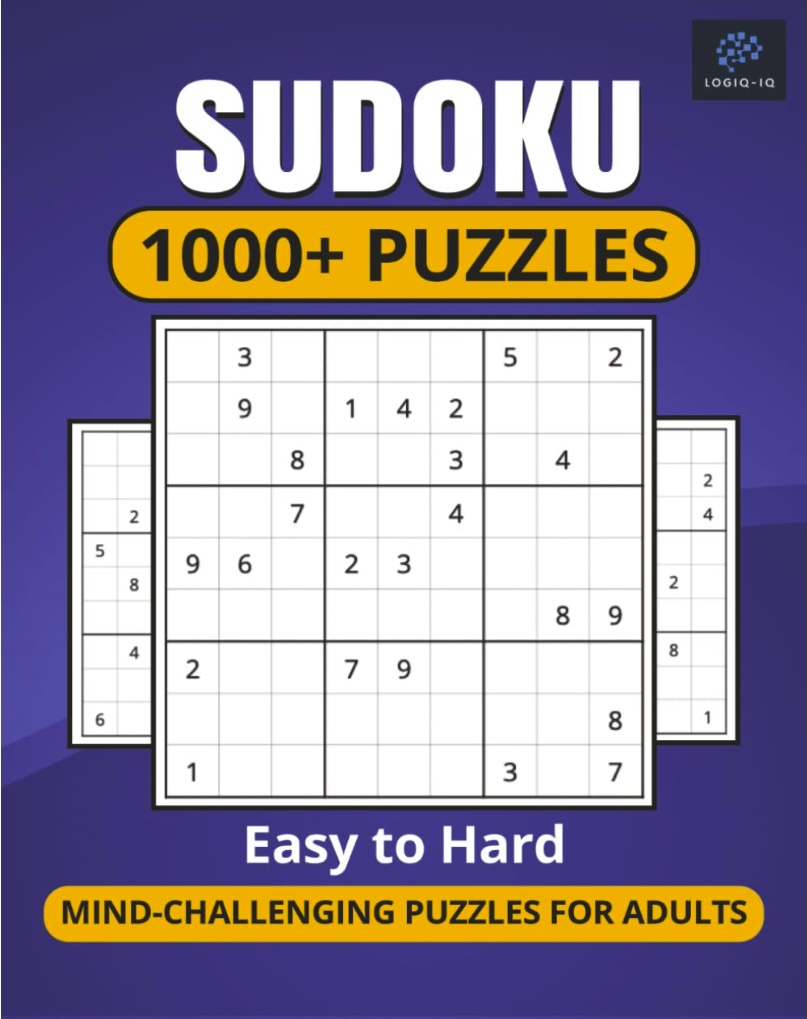
1000+ Sudoku Puzzle Book
by AuraBean Studio
Over a thousand puzzles across easy to hard difficulty — a screen-free daily mental workout that builds focus and calm, one puzzle at a time.
View on Amazon →Medical disclaimer
This article is for educational and personal reflection purposes only. It is not a substitute for professional medical or mental health advice, diagnosis, or treatment. If you have any concerns about your health or wellbeing, please consult a qualified healthcare professional. In a crisis, contact your local emergency services or a mental health crisis line.
Explore these topics
Best picks
Shopping around this topic?
Best Weighted Blankets for Anxiety & Sleep (2026)
Weighted blankets use deep pressure stimulation to reduce cortisol and promote calm. We ranked the top options for anxiety relief and sleep quality — from budget picks to premium buys.
See the ranked list →
Best Yoga Mats — Eco & Organic Options (2026)
The right yoga mat transforms your practice. We ranked the top eco-friendly and natural rubber mats for grip, cushioning, and sustainability — from beginner-friendly to studio-grade.
See the ranked list →
Keep reading
More from the Journal
Weekly Wellbeing Note
Want the best new reads without checking back manually?
Get one thoughtful weekly email with our latest article, a useful recommendation, and one calm practice to try.
No spam. Unsubscribe anytime.
Track how you feel, day by day
Put what you've read into practice. Daily check-ins, mood patterns, breathing exercises, and guided journaling — all in the AuraBean Wellness app.
Not medical advice. Designed for reflection and self-awareness.